Why a Neighbour’s Thriving Farming Venture Might Not be Replicated on Your Farm
Why a Neighbour’s Thriving Farming Venture Might Not be Replicated on Your Farm
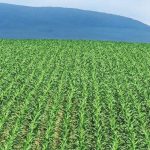
Two farmers in Kiambu County plant the same Duma 43 maize on the exact same day. They use the same fertilizer, the same amount of labor, and even pray for the same rain. Yet, when harvest time approaches, one farmer in Lari packs 22 bags per acre, while the other in Juja struggles to fill 7 bags.
Assuming the inputs were identical, why is there a 15-bag gap?
The answer lies in understanding the pedosphere and the surrounding atmospheric conditions. While they are in the same county, they are miles apart in terms of Agro-Ecological Zones (AEZs). This information aids farmers in planting crops that have higher yield successes, hence achieving higher return on investments.
In this article, we dive into why understanding the physical geography of your land is the ultimate “cheat sheet” to maximizing your yield.
The Four Main Agro-Ecological Zones in Kiambu County, Kenya
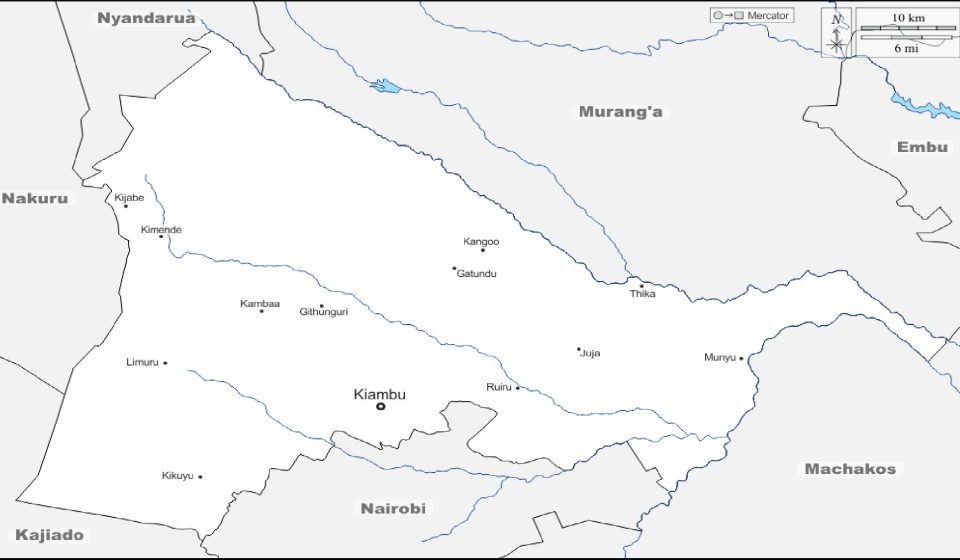
Kiambu county has four main agro-ecological zones that are categorized according to their rainfall, soil type, and the crops that thrive in that region.
- UH – Upper Highland Zones
Found in various areas such as; Lari, Limuru, Parts of Githunguri
| Upper Highland Zones | Thriving Crops |
| UH 0 – Forest zone | Kieni and Kinale forests |
| UH 1 – Sheep and dairy zone | Tea, beans, kales, cabbage, potatoes, dairy cow (approx. 15L/day) |
| UH 2 – Pyrethrum and wheat zone | Pyrethrum, wheat |
- LH – Lower Highland Zones
Found in various areas such as; parts of Limuru, Kiambu town Uplands, some parts of Gatundu North, Gatundu South,
| Lower Highland Zones | Thriving Crops |
| LH 1 – Tea and dairy zone | Tea, coffee, maize (one season), cabbage, carrots, lettuces, kales, leek onions, pyrethrum |
| LH 2 – Wheat/maize and pyrethrum zone | Barley, peas, potatoes, sunflower, apple, pears, pyrethrum, |
| LH 3 – Wheat and barley zone | Kenya Ngiri wheat, maize, peas, beans, potatoes, sunflower, barley. |
| LH 4 – Cattle/sheep and barley zone | Barley |
| LH 5 – Lower highland ranching zone | Barley |
- UM – Upper Midland Zones
Located in areas such as; Ruiru, Juja, Thika, Lower Gatundu
| Upper Midland Zones | Thriving Crops |
| UM 1 – Coffee and tea zone | Beans, cabbages, kales, passion fruits, sweet potatoes, onion, tomatoes, arabica coffee, tea, bananas, pawpaw |
| UM 2 – Main coffee zone | Sunflower hybrid, beans, arabica coffee, avocado, pineapples, cassava, sugarcane |
| UM 3 – Marginal coffee zone | Maize, beans, onions, cabbages, sweet potatoes, kales, tomatoes. |
| UM 4 – Sunflower and maize zone | Maize, sorghum, dwarf sunflower and sisal |
| UM 5 – Livestock and sorghum zone | Barley, millet, dwarf sunflower, |
- Lower Midland Zones
Located in areas such as; Lower Thika, Parts of Juja which boarder Machakos county
| Lower Midland Zones | Thriving Crops |
| LM 4 – Marginal cotton zone | Maize, sorghum, dwarf sunflower, green grams, jojoba, sisal, millet, macadamia nuts, cassava |
| LM 5 – Livestock and millet zone | Millet |
The SPU Farm as a Living Laboratory in the Highlands
The St. Paul’s University (SPU) farm in Limuru serves as a prime example of how aligning agricultural practices with Agro-Ecological Zones (AEZ) leads to exceptional results. The farm is located in the Lower Highland (LH) Zone and acts as a practical classroom for agricultural students to master the intersection of land management and agribusiness.
The Pedosphere
The garden sits on well-drained, dark red volcanic soils which possess moderate-to-high natural fertility, allowing crops to flourish with minimal reliance on industrial chemicals.
Atmospheric Condition
The humid climate in the region is conducive for less evaporation and more moisture content which creates a favorable condition for leafy greens and tubers to thrive without the constant stress of heat-induced wilting.
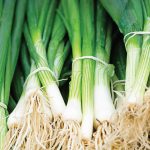
By understanding the local AEZ, SPU has recorded consistent success. The garden currently produces high-quality kales, spinach, ‘Sukuma matumbo’, potatoes, capsicums, leeks, broccoli, tomatoes, and beans. The produce provides organic and sustainable supply chain for:
- The University cafeteria.
- The student body.
- The local Limuru community.
The next phase for the SPU farm is the implementation of Mixed Farming. By integrating livestock rearing with crop production, we are moving toward a “closed-loop” system that features:
- Animal manure which will naturally replenish the volcanic soil’s nutrients.
- Crop residues to serve as supplemental feed for the livestock.
- Maximum Utilization: This approach ensures that every square inch of the lower highland zone is utilized efficiently, providing an all-inclusive curriculum for our agriculture students.
4 Steps to Identify Your AEZ Zone
Finding out exactly where your farm sits within the AEZ spectrum is the first step toward precision farming. Here is how you can pinpoint your classification:
- Consult Agro-Ecological Maps
Start with the big picture. Maps provided by the Ministry of Agriculture or specialized research bodies offer a bird’s-eye view of your region’s classification. By locating a farm on an AEZ map, one is able to see whether the farm belongs to a “Tea-Dairy” zone or a “Sorghum-Maize” belt.
- Gather Local Climate Data
Climate is the heartbeat of the AEZ. Reaching out to reliable sources like the Kenya Meteorological Department (KMD) enables oneto get all-inclusive reliable information on seasonal forecasts, historical data, guidelines on planting timelines, and expected yield outcomes based on specific sub-county weather patterns.
- Conduct Comprehensive Soil Tests
The soil’s quality is the obvious foundation of your yield. To understand your zone’s productivity, one must determine its pH levels, nutrient content, and texture. Soil-testing services are offered in Kenya Agricultural and Livestock Research Organization (KALRO) or licensed private laboratories, whose experts provide expert advise on the best remedial practice.
- Leverage “Indigenous Intelligence”
Data is powerful, but experience is priceless. Consult with industry professionals and neighboring farmers who have worked on the land for decades. These experienced voices often possess ingenious, localized knowledge that can transform your farming strategy.
Benefits of Understanding Agro-Ecological Zones
By categorizing regions based on their unique combinations of climate, soil, and topography, unlocking the full potential of the land won’t be an uphill task. Some of the key benefits of working within your specific zone include:
- Matching Crops to “Temperature Belts”
AEZs act as temperature guides that define where specific crops can flourish. In Kiambu, for instance, the cold, misty highland belts are the gold standard for tea, while the warmer midland regions provide the heat units necessary for high-yielding maize. Trying to swap the two is a recipe for high costs and low yields.
- Optimizing Rainfed Agriculture
Most of our farming relies on rainfall. Because these zones share similar geographical and climatic patterns, knowing your AEZ allows you to predict how much water your land can naturally provide. This helps in selecting varieties that won’t wither during a standard dry spell in your region.
- Precision Planting and Harvesting
For new farmers, timing is everything. AEZ data provides a historical timeline for the best planting and harvesting dates. By aligning your farm’s calendar with the local zone’s patterns, you significantly increase your chances of a “bumper harvest” and avoid the losses that come with late planting.
- Predictive Pest and Disease Management
Every AEZ has its own resident pests and diseases. For example, high-humidity highland zones may be more prone to fungal blights, while drier lowland zones might face higher pressure from certain insects.
Understanding these local threats allow for Predictive Agriculture, hence protecting your crops early and minimizing the need for excessive pesticide usage.
- Climate Resilience and Food Security
As weather patterns shift, AEZ information becomes our compass for adaptation. It helps us anticipate how a warming climate might change what is viable on our land, allowing farmers to pivot to more resilient crops before food security is threatened.
Conclusion
Climate change, deemed to be ‘biggest challenge of our time,’ has impacted all sectors and heightened the risk of food insecurity. However, understanding Agro-Ecological Zones (AEZs) offers a proactive way forward.
Learning and understanding AEZs is essential for improving yields and ensuring our nation remains resilient, even as we navigate the pressures of breaching planetary boundaries. It is time to stop guessing and start growing with precision.
By applying the above spatial analysis framework, that is, combining climate data, soil health, and socioeconomic factors, we can transition from reactive farming to a predictive form of agriculture.
Interested in learning more about Agro-ecological zones?
Call us today on out toll-free line: +254 800 723 000
Or
Email us on: contactcenter@spu.ac.ke