Crop of the Day: Leek
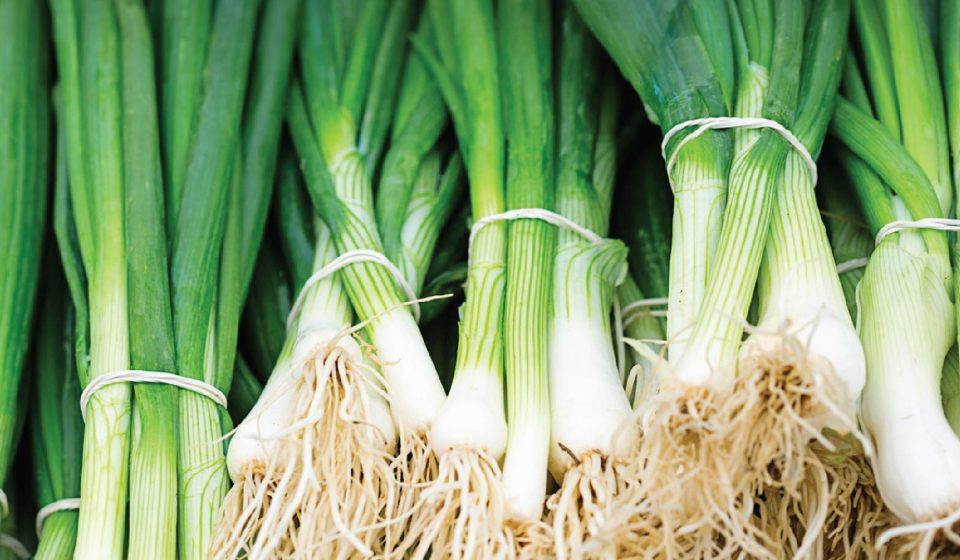
Leek is a premium, green-onion like vegetable that has been gaining traction in Kenyan hotels and high-end organic markets. They belong to the allium family alongside garlic and are loved for their mild and somehow sweeter flavor that lacks the pungent bite of traditional onion varieties. The edible portion is the long, white cylindrical stem that transitions upwards into dark green fan-like leaves.
Nutritional & Market Value
Beyond their gourmet appeal, leeks are a powerhouse of nutrients, making them a favorite for health-conscious consumers:
- Heart Health: High in flavonoids like kaempferol, which help protect blood vessels.
- Vitamin Rich: Excellent source of Vitamin K (essential for bone health) and Vitamin A (for vision and immunity).
- Fiber Content: Promotes healthy digestion and satiety.
- Market Advantage: Their “premium” status often allows farmers to command higher prices in organic and hospitality markets compared to standard bulb onions.
Favorable Agro-Ecological Zone
Leeks thrive in the cool climate of Kenya’s highland regions with ideal temperature range of 15°C to 25°C, experienced at the St. Paul’s University (SPU) Ngecha Farm located in Limuru.
Other favorable conditions include:
- Altitude of between 1,000 to 2,800 meters above sea level. Lower altitudes exhibit warmer temperatures that fail to produce high-quality stems.
- Sufficient rainfall of 500 to 1,000mm annually which should be well-distributed throughout the growing season. Alternatively, drip irrigation can be utilized to keep the soil moist.
- Leeks thrive in well-drained, neutral pH (6-7), and fertile loamy soils that are rich in organic matter.
- Key Regions include:
- Central Kenya (Nyeri, Kiambu)
- Rift Valley (Nakuru, Timau, Molo)
- High-altitude areas of Kakamega, Meru, and Bungoma.
Nursery Establishment and Transplanting
The entire nursery period typically lasts from 6 to 8 weeks. For better results, seeds are sown at 1 cm depth. Germination takes place quickly within 10 to 14 days.
Seedlings are ready for transplanting when they are almost 20 cm tall with stems as thick as a pencil. The best window for transplanting in Kenya is during the rainy seasons (March to April and October to November).
The ideal spacing for rows is anywhere between (30-45 cm) while for plants is between (15-20 cm). Deep root planting (5 to 7 cm) encourages the production of a long, white stem, a process known as blanching.
The whole process of planting in a seedbed to final harvest takes about 120 to 150 days.
Crop Management Practices
- Blanching, involves piling soil around the base of the plant to exclude light from the stem. This keeps the stem white, tender, and competitive.
- Deep irrigation, water every 2 to 3 days for the first three weeks, then weekly (20 to 30 mm per session). Drip irrigation is preferred to reduce fungal diseases like downy mildew.
- Weed Control achieved by mulching during the first 6 to 8 weeks.
- Harvesting when stems reach 2 to 3 centimeters in diameter. The harvest window is flexible in that the mature leeks can be left in the field for several weeks as long as conditions remain favorable. Harvest in the cool morning to improve shelf life.
Ready to grow? Join SPU’s rewarding and well-balanced agricultural program.
Get in touch through:
- Our Toll-free line – +254 800 723 000
- Email – contactcenter@spu.ac.ke