Mastering Greenhouse Capsicum Farming
At St. Paul’s University (SPU), we are committed to exploring high-yield agricultural practices that align with sustainable development goal (SDG 2) of Zero hunger and foster community togetherness when we sell our produce to nearby markets.
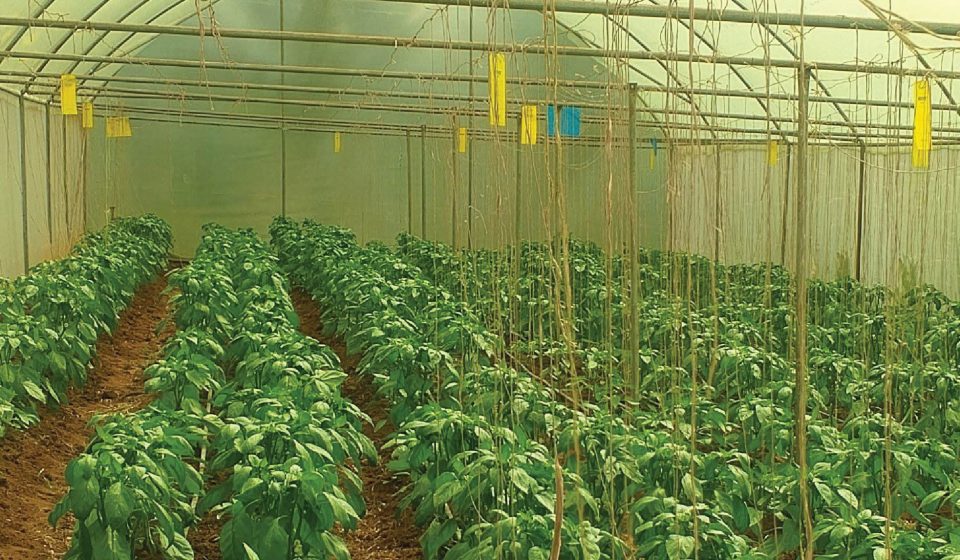
To make this a reality, the agricultural department and the students have adopted greenhouse farming to grow capsicums, also known as bell peppers. The capsicum family has been known to perform very well in a greenhouse setting, and as such, an experiment was conducted at SPU’s farm, which ticks off most if not all of the required conditions for capsicum to thrive.
Whether you are a prospective student looking to master the art of farming or an enthusiastic farmer interested in sustainable food production, below is a curated guide on how to master greenhouse capsicum farming, owing to the practical sessions at the farm.
Setting the Foundation
Choose a proper site for your greenhouse structure in an area that (preferably) has no recent history of growing tomatoes or other nightshade family crops to minimize existing soil risks.
All farming successes begin with understanding the ideal soil and location. Capsicum thrives best in well-drained loamy soils that are found in high altitudes of 1500 – 2000 meters above sea level.
Before planting, the soil should be thoroughly ploughed, enriched with organic manure, and formed into raised beds of 1 metre to ensure proper drainage.
Growing Conditions
To ensure the green capsicums thrive, the following conditions ought to be met:
- Steady temperature range of between 18–30°C.
- Drip irrigation is highly recommended as it keeps foliage dry and provides a continuous, balanced supply of moisture.
- Water resource management to avoid over-irrigation which can lead to “damping off” in young plants.
Planting and Harvest
When you are ready transplant seedlings from the nursery, use a spacing of 30 cm. This gives each plant enough room to expand and receive adequate light.
One of the greatest advantages of utilizing greenhouses is its protection; the enclosed environment is naturally less conducive to common pests.
This means that your plants can continue to produce fruit for up to eight months, allowing for a consistent and lengthy harvest period.
Conclusion
Greenhouse farming not only controls the environment, but also achieves high returns on relatively small pieces of land, even with less water for irrigation.
While many rightfully associate poorly done farming with climate change, the greenhouses at SPU is a tool for Climate-Smart Agriculture through using less water and fewer chemicals to produce high-quality capsicum that is sold to the nearby markets.
Interested in being part of this agricultural revolution, give us a call or send an email through:
Our Toll-free line is: +254 800 723 000
Email – contactcenter@spu.ac.ke
Saint Paul’s University | The University of Choice!