Teaching for the Future: SPU’s Role in Strengthening CBE Implementation
We have about a year and a half before the final cohort of the previous 8-4-4 system depart and finally signal and end of an era for the education system that taught most of us. The not-so-new Competency-based Education (CBE) has been embraced by teachers and parents as it aims to equip learners with hands-on skills that will make them competitive in the job market years on.
The Competency-Based Education (CBE) has brought new changes in that, Early Childhood Education Development (ECED) was incorporated to the basic education and has two levels only (Pre-Primary 1 and 2) that is PP1 and PP2 and the subject areas are now referred to learning areas.
In designing the Competency-Based Education it is envisioned that at the end of the learning period every learner should have competence in the following seven core competency areas; communication and collaboration, critical thinking and problem solving, imagination and creativity, citizenship, learning to learn, self-efficacy and digital literacy.
As with any new roll-out, there are challenges in the CBC curriculum which mainly include: stakeholder participation, resource allocation, lecturer’s retooling, and equitable student outcomes.
St. Paul’s University (SPU) understands the importance of quality education and as a world-class centre for higher learning, we regard quality as fundamental in building and maintaining reputation while gaining respect and support from local and international publics through the Quality Assurance directorate.
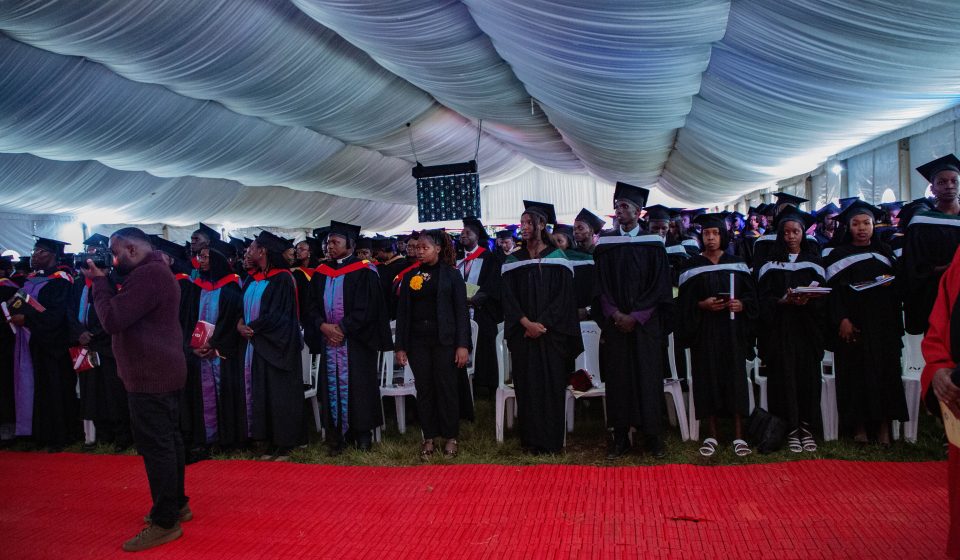
As such, SPU has continually updated its educational programmes to reflect the incoming reality and ensure our learners are fit to teach CBC graders upon conferment of degrees.
Some of the ways SPU achieves this is through:
1. Demystifying Teaching Practice: From Lecturers to Facilitators
One of the biggest anxieties surrounding CBC is the shift from teacher-centered dictation to learner-centered facilitation. Under the leadership of Dean Dr. Petronilla Otuya, SPU has championed structured, reflective frameworks to reshape teacher identities.
Through innovative tools like our Teaching Practice Daily Reflections Booklet, SPU pre-service teachers don’t just deliver a lesson and walk away. They are trained to evaluate their own pedagogical methods daily, bridging the gap between theory and classroom reality. Our faculty has even contributed directly to this national conversation through foundational literature, such as the widely acclaimed handbook Teaching Practice Demystified, which serves as a guide for trainees navigating both traditional and CBC environments.
2. Re-Engineering Assessment Models
CBE has fundamentally dismantled the pressure of high-stakes, single-exam grading, replacing it with continuous, formative assessment. SPU’s Quality Assurance Directorate has addressed this head-on by rolling out Multiplier Training Systems for faculty and student teachers alike.
We train educators to design authentic assessment tools that evaluate a learner’s competency rather than their ability to memorize. Our graduates enter the school system knowing exactly how to track and nurture individual student growth over time.
3. Aligning with Junior and Senior Secondary Pathways
As CBE graduates transition into higher levels of basic education, the demand for specialized educators in Junior Secondary Schools (JSS) and Senior Secondary pathways has surged. SPU has carefully curated its Bachelor of Education (Arts) and Bachelor of Education in Early Childhood Development and Education (ECDE) subject combinations to match these institutional gaps.
By strategically clustering subjects—such as integrating Mathematics with IT, or balancing humanities—we ensure our teacher trainees are perfectly aligned with the specific STEM, Social Sciences, and Talent pillars defined by the Ministry of Education.
4. Digitalization and Hands-On Competency
You cannot teach digital literacy if you haven’t mastered it yourself. In alignment with the SPU Strategic Plan, the university embeds robust digital workflows into the learning process. By interacting with our virtual and blended learning platforms, our student teachers gain first-hand mastery of educational technology, preparing them to seamlessly utilize platforms like the Kenya Education Cloud.
Furthermore, through the SPU TVET Institute, our focus on the Competency-Based Education and Training (CBET) framework mirrors the exact hands-on, project-based realities that secondary school teachers are now expected to foster in their classrooms.
Looking Ahead
As the nation prepares for the eventual transition of CBC cohorts into higher education, SPU is already engaging with the Commission for University Education (CUE) regarding the University Competency-Based Education Framework (UCBEF).
We are not just preparing teachers for the classrooms of today; we are positioning St. Paul’s University as a thought leader shaping the entire future of Kenyan education.
CBC emphasizes community service learning and parental engagement and because SPU is rooted in servant leadership, citizenship, and social responsibility, our graduates are uniquely equipped to build the strong home-school-community partnerships that make CBC successful.
Are you ready to turn your passion for teaching into a meaningful, future-proof career? Explore our ongoing intakes at our Limuru, Nairobi, and Nakuru campuses, or join our vibrant Virtual Campus today.
For further enquiries, Kindly contact us via;
- Our Toll-free line is +254 800 723 000
- Email – contactcenter@spu.ac.ke
Saint Paul’s University | The University of Choice!