Why Tomato Prices are Skyrocketing
Skyrocketing prices of basic commodities have occasioned a crisis among Kenyan consumers whose purchasing powers has been severely weakened to the extent of food stuff not being within their reach. Tomatoes, the ever-present yet undervalued household commodities is no exception. As a daily necessity, one cannot help but wonder, why are tomatoes now retailing at similar prices to imported apples?
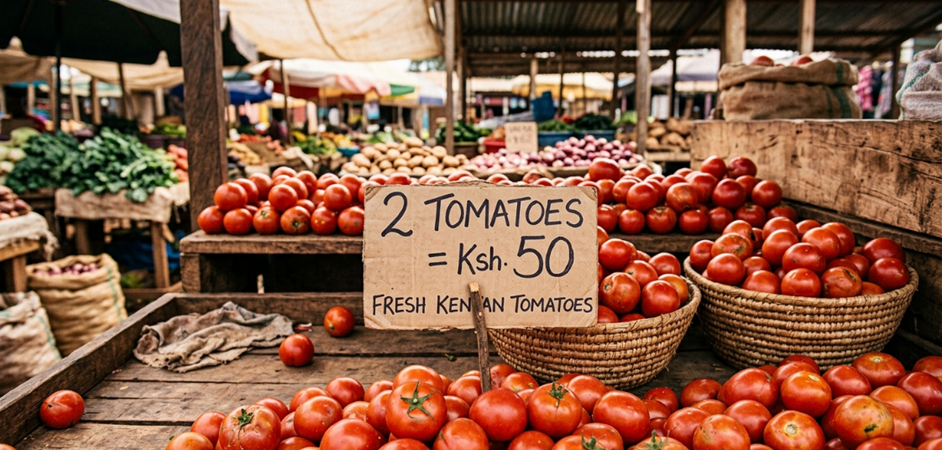
In most areas, consumers report buying just two tomatoes for KES 50! A single crate now retails between KES 17,000 and KES 18,000, which is a massive jump from the KES 6,000 to KES 8,000 range seen earlier this year. According to the Kenya National Bureau of Statistics (KNBS), prices rose from KES 99.60 per kg in March 2026 to KES 108.60 in April 2026.
Nationwide, tomatoes represent the largest share of Kenya’s horticultural industry at 29%, with an impressive 95% of harvested crops sold locally.
In this blog article, we unpack the “whiplash effect” behind these costs and show how St. Paul’s University’s (SPU) Garden is using greenhouse technology to ensure food security during these volatile times.
The “Whiplash Effect”; From Market Crash to Scarcity
- The January Crash: By January 2026, the market was drowning in supply. Prices crashed to KES 20 per kg, leaving farmers in absolute despair as they sold at heavy losses or fed rotting produce to livestock.
- The Replanting Strike: Dejected by these losses, many farmers refused to replant in February.
- The Climate Blow: For the few who did take a chance, March-April period brought devastating flooding in major agro-ecological zones, triggering widespread Late Blight disease prior to harvest.
- Logistical Barriers: Heavy rains damaged key transport roads, causing the number of lorries arriving from the Rift Valley and Central Highlands to drop by more than half. This scarcity allowed middlemen to dictate exorbitant prices.
There was also a whiplash effect on the consumer side who had gotten used to buying cheap tomatoes and enjoyed various cuisines such as salads, omelets, and pasta sauce. The psychological damage from the January losses directly fueled the May shortages.
Engineering the Perfect Harvest Using the SPU Approach
Tomatoes are versatile, but they are also temperamental. In Kenya, they thrive in specific agro-ecological zones characterized by:
- Temperature range of 20°C – 27°C.
- Altitude: 0 –2000m.
- Soil pH: Between 6.0 and 7.0.
- Humidity: 60–80% (though high humidity can be a double-edged sword).
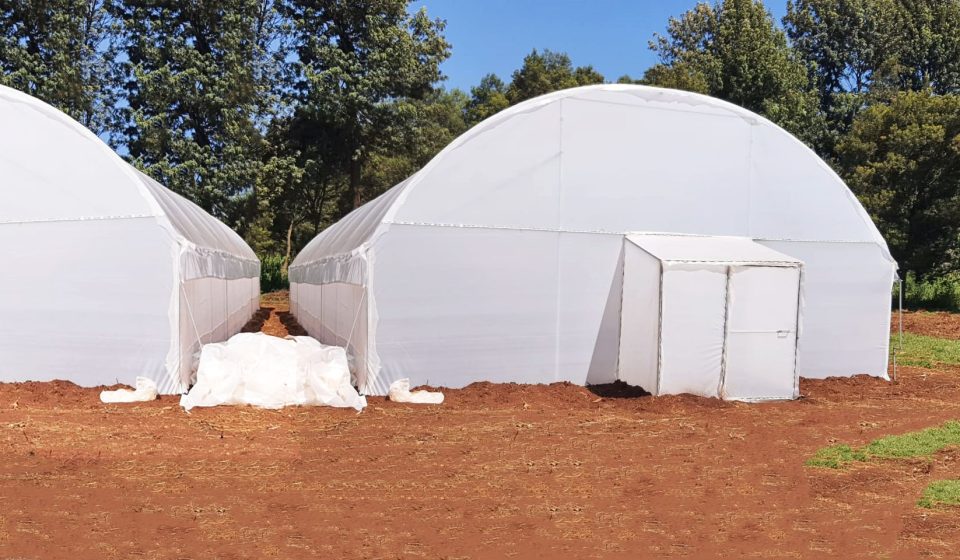
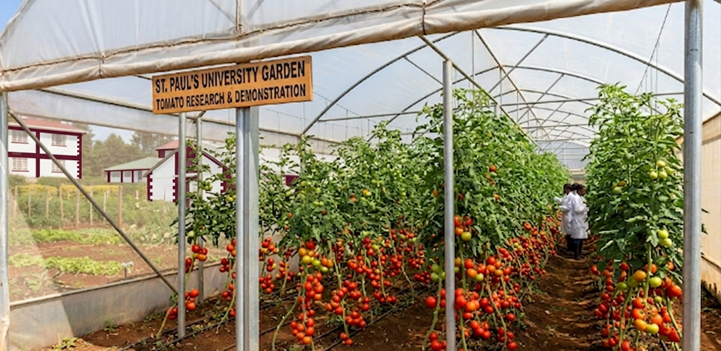
In keeping with SPU’s Mission, innovation a pivotal element in teaching, learning and research, has equally been cascaded to the farm with heavy investment in greenhouses to create a controlled environment for the crops to thrive through regulated supply of water, nutrients, herbicides and pesticides and protection of harsh weather conditions.
Why SPU Chose Greenhouse Agriculture
- Climate Resilience: The greenhouses shield crops from natural disasters like the strong winds and flooding that destroyed open-field crops this season.
- Disease & Pest Control: By creating a physical barrier, we protect the fruit from Tuta absoluta and moisture-heavy diseases like Late Blight.
- Increased Productivity: Greenhouse environments allow for higher density planting and significantly increased yields compared to open fields.
- Consistent Supply: While the rest of the market faces seasonal shortages, SPU’s controlled environment allows for regular, predictable harvests.
The Path Forward
The current tomato crisis is a significant wake-up call for Kenyan agribusiness. While the broader market sees “red” due to rising costs, St. Paul’s University (SPU) sees “red” due to ripeness. Beyond the harvest, SPU students are gaining firsthand experience in climate-resilient food security which ensures they remain competitive with a modern, all-rounded expertise.
In the essence of national food security, Kenya can greatly benefit from using industry 4.0 technologies such as digital twins to model climate scenarios all-year round using the weather forecast data from the meteorological department in order to advice farmers on the best methods of planting that will ensure less losses and heavy yields.
Stay tuned for our next edition of smart farming!
Are you interested in learning more about how we use precision agriculture at the SPU farm?
Join us in advancing food security as a student specializing in agriculture, pursuing bachelors of education arts.
Intake is ongoing!!
Contact us for further guidelines,
Email – contactcentre@spu.ac.ke
Phone: + 254 800 723000